
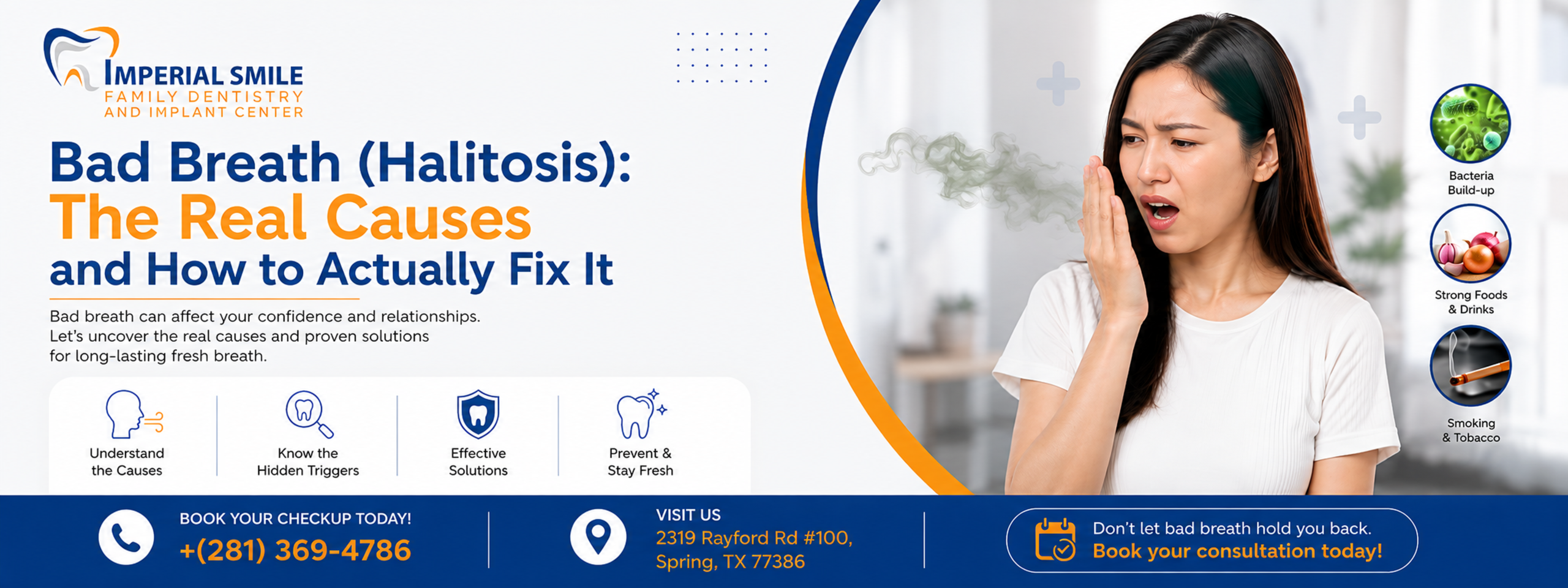
Let’s be honest — nobody wants to be the person whose breath makes people take a small step back. And yet, at some point, it happens to almost all of us. The frustrating part? You usually can’t smell your own breath, so you’re left guessing.
Here’s the good news: bad breath (the clinical word is halitosis) is one of the most fixable problems we see. In most cases, it isn’t a sign of anything scary — it’s a signal that something in your mouth needs attention. Once you know what’s actually causing it, the fix is usually simpler than you’d think.
So let’s walk through it honestly: what really causes bad breath, the mistakes people make trying to cover it up, and what genuinely works.
First, Why Can’t You Smell Your Own Breath?
It’s a weird bit of biology. Your nose and mouth are connected at the back of your throat, so your brain gets a constant, steady stream of your own breath — and it simply tunes it out. It’s the same reason you stop noticing a smell after you’ve been in a room for a few minutes.
That’s why the classic “breathe into your cupped hands” trick almost never works. If you really want a hint, lick the back of your wrist, let it dry for a few seconds, and smell it. Not glamorous, but it’s more honest than your cupped palm.
The Real Causes of Bad Breath
Bad breath gets blamed on garlic and onions, but those are usually temporary guests. Chronic bad breath — the kind that keeps coming back — almost always traces back to one of these.
1. Bacteria on Your Tongue (the #1 culprit)
Here’s the truth most people don’t realize: the majority of bad breath comes from the back of your tongue, not your teeth. That soft, slightly rough surface is a perfect home for bacteria, which feed on food debris and dead cells and release smelly sulfur compounds as they go. If you brush your teeth beautifully but never touch your tongue, you’re leaving the main offender untouched.
2. Dry Mouth
Saliva is your mouth’s built-in cleaning crew — it rinses away food and keeps bacteria in check. When your mouth dries out, odors spike. This is exactly why “morning breath” is a thing: your saliva slows down while you sleep. Dry mouth can also be caused by dehydration, breathing through your mouth, alcohol, and a long list of common medications.
3. Trapped Food and Plaque Between Teeth
If you don’t floss, tiny bits of food sit and rot in the gaps between your teeth. It’s as unpleasant as it sounds — and no mint can outrun it. This is often the reason someone brushes twice a day and still struggles with their breath.
4. Gum Disease
Persistent bad breath that won’t go away, especially with bleeding or tender gums, can be a warning sign of gum (periodontal) disease. The bacteria causing the odor are the same ones quietly damaging the tissue and bone that hold your teeth in place. This is one you don’t want to ignore — it’s your mouth waving a red flag.
5. Cavities, Old Fillings, and Infections
Decay creates little pockets where bacteria thrive, and an infected or abscessed tooth can produce a distinct, foul smell. Cracked fillings and ill-fitting crowns can trap debris in the same way.
6. Food, Coffee, Alcohol, and Smoking
Garlic and onions release sulfur compounds that actually enter your bloodstream and get exhaled from your lungs — which is why brushing doesn’t fully erase garlic breath. Coffee and alcohol dry your mouth out. And smoking is a double hit: it dries the mouth and leaves its own lingering smell, while dramatically raising your risk of gum disease.
7. Something Deeper (less common, but worth knowing)
Roughly 8–10% of the time, bad breath comes from outside the mouth entirely — sinus infections and post-nasal drip, tonsil stones, acid reflux, uncontrolled diabetes, or other medical conditions. If your mouth is genuinely healthy and the smell persists, this is worth exploring with a doctor.
The Mistakes That Make It Worse
Before the fixes, let’s clear out the things people do that quietly backfire:
- Relying on mints and gum. Sugary mints feed the very bacteria causing the smell. At best you’re masking the problem for ten minutes.
- Using harsh, alcohol-based mouthwash. It gives you a burst of freshness, then dries your mouth out — which sets you up for worse breath an hour later.
- Brushing harder instead of smarter. Scrubbing aggressively won’t reach the tongue and the spaces between teeth where the real problem lives.
- Ignoring it and hoping. If it’s gum disease or decay, waiting only lets it grow.
How to Actually Fix Bad Breath
Here’s what genuinely works — in order of impact.
Your Fresh-Breath Checklist
- Clean your tongue every day. Use a tongue scraper (better than a brush) and gently work from back to front. This one habit alone eliminates most bad breath for most people.
- Floss once a day, no exceptions. This clears out the trapped, rotting debris that brushing can’t reach. Do it before bed.
- Brush twice a day for two full minutes. Don’t rush — and reach the back teeth and gumline.
- Stay hydrated. Sip water throughout the day to keep saliva flowing and rinse bacteria away.
- Chew sugar-free gum with xylitol. It stimulates saliva and, unlike sugary mints, actually helps rather than feeds the bacteria.
- Choose an alcohol-free mouthwash. Look for one that fights bacteria without drying your mouth out.
- Cut back on the usual suspects. Coffee, alcohol, and tobacco all dry the mouth and worsen odor.
- Keep your regular dental checkups. A professional cleaning removes the tartar and hidden buildup no toothbrush can.
Give these a genuine two-week try. For the large majority of people, that’s all it takes to notice a real, lasting difference.
When Bad Breath Means It’s Time to See a Dentist
Sometimes bad breath is more than a hygiene issue — it’s your body telling you something needs professional attention. Book a visit if you notice:
- Bad breath that won’t go away even after two weeks of the routine above
- Bleeding, red, or swollen gums
- A constant bad taste in your mouth
- Loose teeth, or teeth that feel like they’ve shifted
- Pain, sensitivity, or a tooth that feels “off”
- A dry mouth that no amount of water seems to fix
None of these are reasons to panic — but they are reasons to get checked. Caught early, nearly every cause of bad breath is straightforward to treat. Left alone, the same problems tend to get more complicated and more expensive.
Still Fighting Bad Breath? Let’s Get to the Bottom of It.
At Imperial Smile Family Dentistry, we’ll find the real cause — not just cover it up — and give you a clear, comfortable plan to fix it for good. Fresh breath and real confidence are closer than you think.
Quick Answers to Common Questions
Does bad breath always mean poor hygiene?
No. Great brushers can still have bad breath if they skip their tongue and flossing, or if there’s an underlying issue like dry mouth or gum disease. It’s about where the bacteria are, not just how often you brush.
Can mouthwash cure bad breath?
Not on its own. Alcohol-based rinses often make it worse by drying your mouth. Mouthwash can help as a finishing touch, but only alongside tongue cleaning and flossing — never as a replacement.
Why is my breath worse in the morning?
Your saliva slows down while you sleep, so bacteria multiply overnight. It’s completely normal and usually clears once you brush, scrape your tongue, and drink some water.
How fast can I fix it?
If the cause is your tongue or trapped food, many people notice a difference within days. If it’s gum disease or decay, a dental visit will get you on the right track quickly.